|
|
|
| Leaving a Mark on Earth
How can you leave a mark today that will be recognizable in year 4000?
What can you think of around us today that will still be here in year 4000?
(Stop for a moment and think about that!)
And if your mark is recognizable in year 4000, will the viewer know it
is your mark or will it become another mystery from the 21st century?
Below we address these questions.
| | Today's Media is Temporary
You lead a busy life.
You do many things.
You have made some accomplishments you are very proud of.
Some of those accomplishments are perhaps acknowledged by your community.
Or perhaps you have something to say; you want to express yourself.
| 
|  Today, you express yourself and your accomplishment with the media tools
around us:
perhaps you receive or create a certificate of achievement;
perhaps you write an article for a newspaper, journal, or blog;
perhaps you achieved a high score on a web site and now enjoy being an expert;
perhaps you announce your wedding engagement in a beautiful invitation or an
on-line animation, or nice photo with a few words of text.
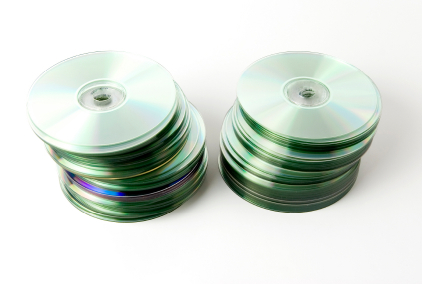
All these expressions are stored on temporary media: paper, web site server,
e-mail, thumbnail drive, photo paper, hard disk, CD-ROM or DVD-ROM.
All this media disintegrates in time all too soon.
Today, you express yourself and your accomplishment with the media tools
around us:
perhaps you receive or create a certificate of achievement;
perhaps you write an article for a newspaper, journal, or blog;
perhaps you achieved a high score on a web site and now enjoy being an expert;
perhaps you announce your wedding engagement in a beautiful invitation or an
on-line animation, or nice photo with a few words of text.
All these expressions are stored on temporary media: paper, web site server,
e-mail, thumbnail drive, photo paper, hard disk, CD-ROM or DVD-ROM.
All this media disintegrates in time all too soon.
| 
| What Mark is Readable in Year 4000?
So, with media being so temporary, it begs the question,
"What media is not temporary?"
To answer that question, let's look at the media that has survived over the
past 2,000 years:
| 
| 
Books
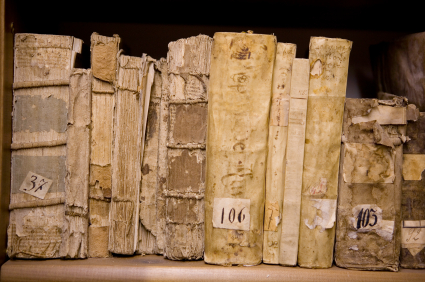
Amazingly, we do actually have books that were written 2,000+ years ago.
Books have been around since before then, but extremely few survive to today.
Book pages become torn.
Ink fades.
Books can be burned.
Book bindings can become undone with pages lost.
The leather covers of books can disintegrate and fail to protect the pages within.
The books we have today from 2,000 years ago are now in museums and
protected from further environmental damage.
| 
| Within The Family
Items of family importance can be handed down from generation to generation.
These might be papers, jewelry, or art objects.
Although the best of intentions ensures the items pass through many generations,
there is no guarantee that the hand-off to the next generation will be successful
nor that the next generation will revere and keep safe the items.
Unfortunately, items end up in estate sales and fall out of the hands of the family.
Although there may well be items on Earth that have been kept in a family for 1,000
or more years, the odds are against an item surviving this way.
| 
| Great Works
Certainly great works by individuals are preserved through time.
We humans want to preserve them.
William Shakespeare's
mother would be proud to see her son's plays still in popular circulation 400 years later;
but only 36 of his plays survive to today.
Similarly, Sophocles'
mother would be proud of her son's Greek plays 2400 years later;
but only 7 of his 120 plays survive to today.
Producing a great work inspires others to preserve your work (or at least portions of it).
But contemporaries of Shakespeare and Sophocles are not so well preserved, even though
they were very good, too.
| 
| Granite is Permanent
Although messages written on paper, clay tablets, papyrus, or cloth may have
survived down the centuries by luck, messages written in stone have easily survived down those
same centuries.
Granite is permanent.
It is the rare exception when a granite stone with writing is demolished.
You can visit a museum such as the
Metropolitan Museum of Art in NYC and touch
a stone with Egyptian writing on it today!
That message has been preserved without human intervention since 4,000 years ago.
It hasn't melted, burned, unraveled, or warped
(although any original paint on it is long gone).
Admittedly, the Egyptians used limestone, which did crack in places;
 however, granite is much, much harder than limestone and subsequently less likely to crack.
In short, when you mark on granite, it's going to stay marked for 1,000's of years!
however, granite is much, much harder than limestone and subsequently less likely to crack.
In short, when you mark on granite, it's going to stay marked for 1,000's of years!
| 
|
|
|
